Before you pay

See what a pre-payment supplier report looks like

This sample shows how VeriSupplier turns supplier identity, PI issuer, bank beneficiary, factory claims, and documents into a practical payment decision before you wire a deposit.

What you can learn here
Who am I really paying?
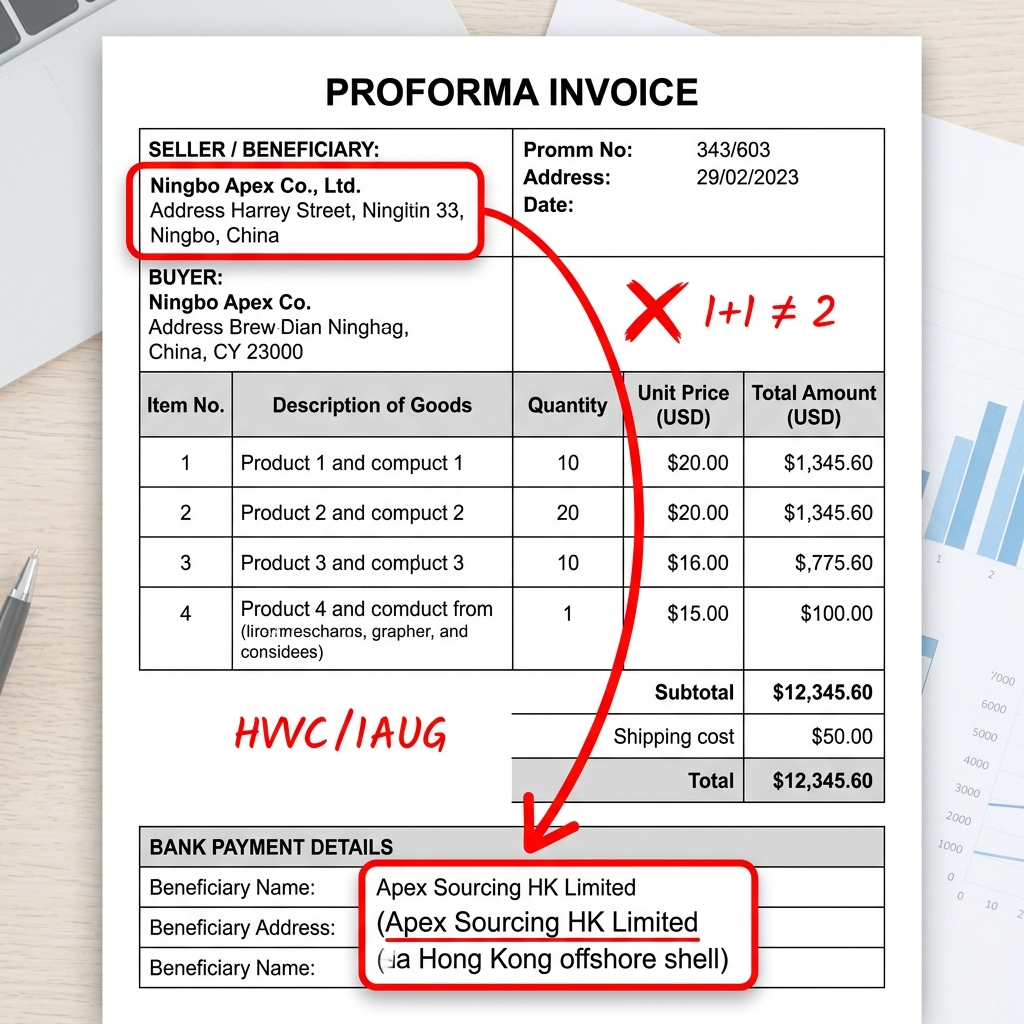
Check whether the supplier name, PI issuer, and bank beneficiary are the same company or clearly connected.
Do the documents match?
Compare the website, marketplace profile, registry record, certificates, and PI before trusting the supplier story.
What looks wrong?
Spot gaps such as offshore payees, certificate screenshots, vague factory photos, or product specs that changed.
What should I ask for?
Use the case to decide what documents to request, what payment terms to change, and when to pause.
Sample report output

A report should tell you whether to pay, pause, or ask for proof.

The goal is not a generic score. The report connects each warning sign to a document, public clue, or missing proof so the buyer knows what to ask before sending money.

Recommended action in this sample

Pause the wire transfer. Ask the supplier to explain the Hong Kong payee relationship, provide a signed PI with matching responsible entity, and prove the certificate and factory claims.

Ask for payee authorization
Request a signed letter or agreement linking the offshore payee to the verified supplier.
Request corrected PI
The PI should name the responsible company, payment terms, product specs, and bank beneficiary clearly.
Verify factory and certificate proof
Ask for model-level certificate coverage, factory address proof, and current business license.
Review my PIBuild Supplier Dossier
Payment Risk Report · Example

Shenzhen ABC Optical Co., Ltd.

Order value: $12,500 · Stage: 30% deposit requested
High caution
Decision
Do not wire yet
High payee mismatch risk
Main issue
PI / beneficiary mismatch
Different receiving entity
Next step
Request proof
Payee link and corrected PI
Entity match table
SourceName or claimStatusJudgement
Supplier in conversationShenzhen ABC Optical Co., Ltd.Expected partyMatch target
Business license / registryShenzhen ABC Optical Co., Ltd.Active entityMatches supplier name
PI issuerABC Optical Export HK LimitedDifferent entityNeeds explanation
Bank beneficiaryABC Optical Export HK LimitedDifferent/offshore payeeHigh caution
Factory claimOwn factory in ShenzhenPartially supportedNeeds proof
Evidence reviewed
AreaCheckedFindingImpact
Supplier legal entityShenzhen ABC Optical Co., Ltd.Active company record found, but the payment document names a different receiving entity.Medium
PI issuerABC Optical Export HK LimitedPI issuer differs from the mainland supplier name shown in the deal conversation.High
Bank beneficiaryABC Optical Export HK Limited / Hong KongBeneficiary is offshore and does not clearly match the supplier legal entity.High
Factory claimWebsite, catalog, business scope, marketplace profileManufacturing claim has partial support, but the public footprint also fits a trading/export role.Medium
Certificate claimCE file screenshot provided by supplierCertificate holder and product model coverage need confirmation before relying on the claim.Medium

This is a simulated example. A real report uses the buyer's uploaded files, supplier profile, and available public clues.
Choose the situation closest to yours

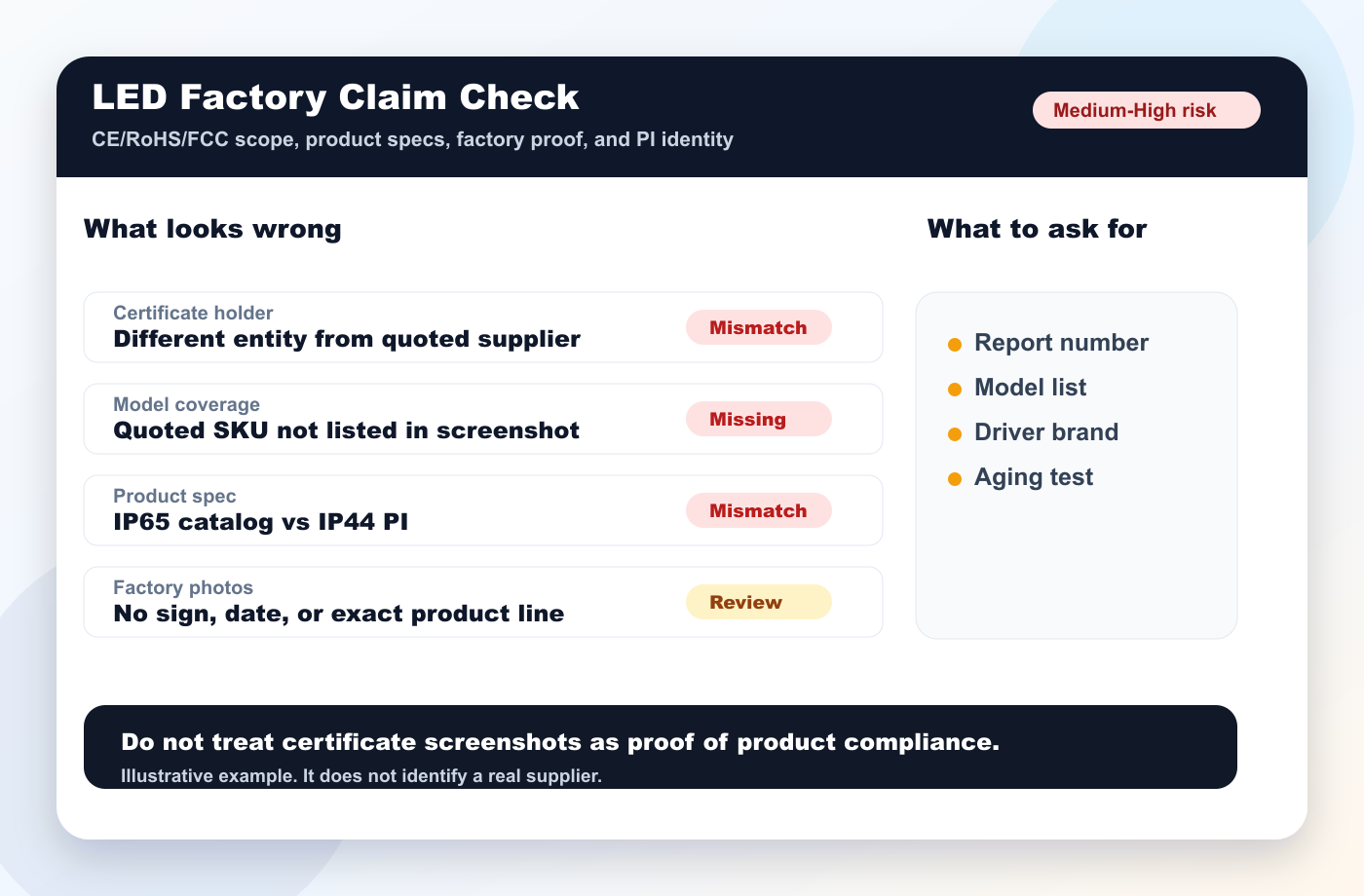
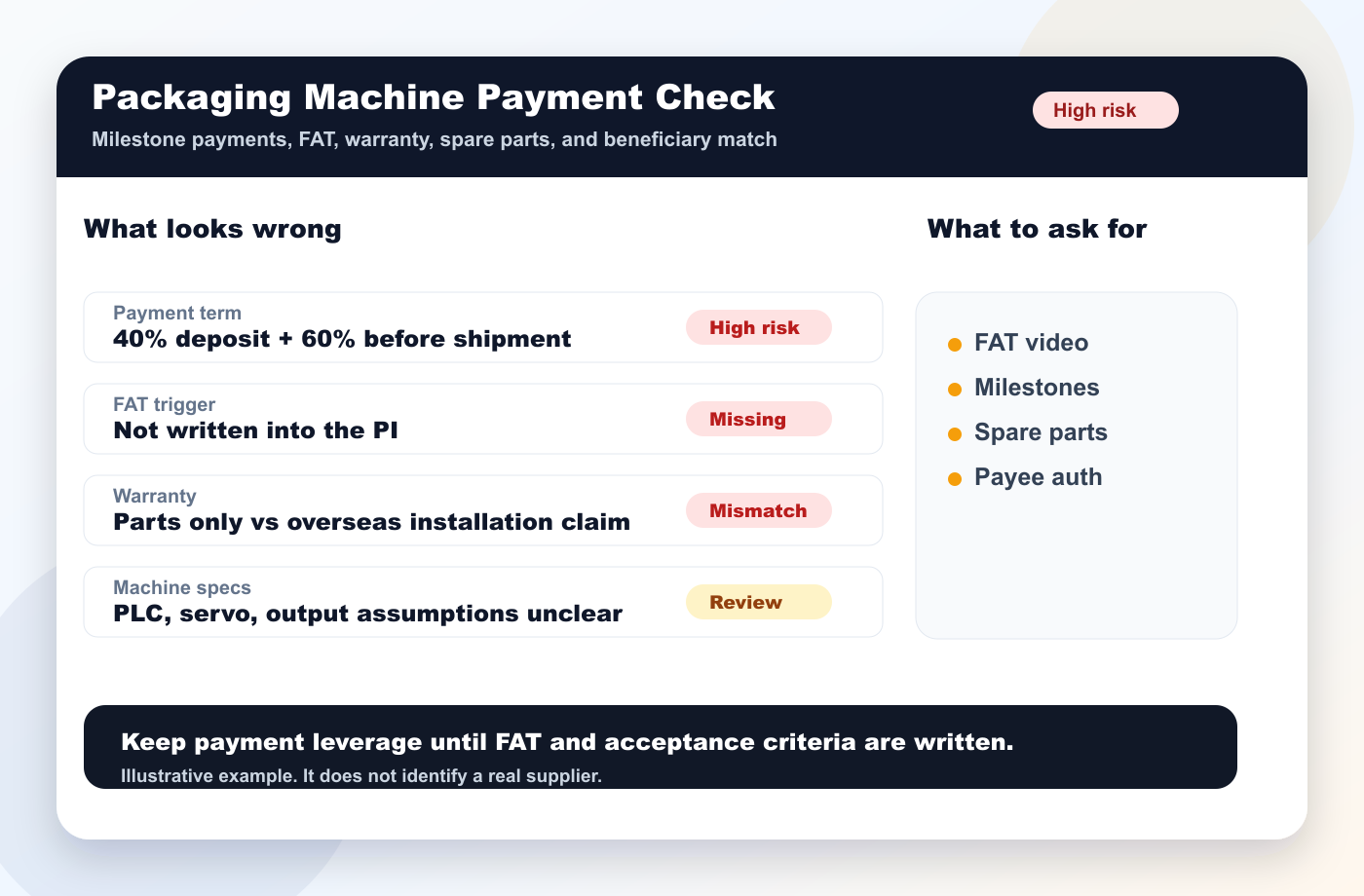
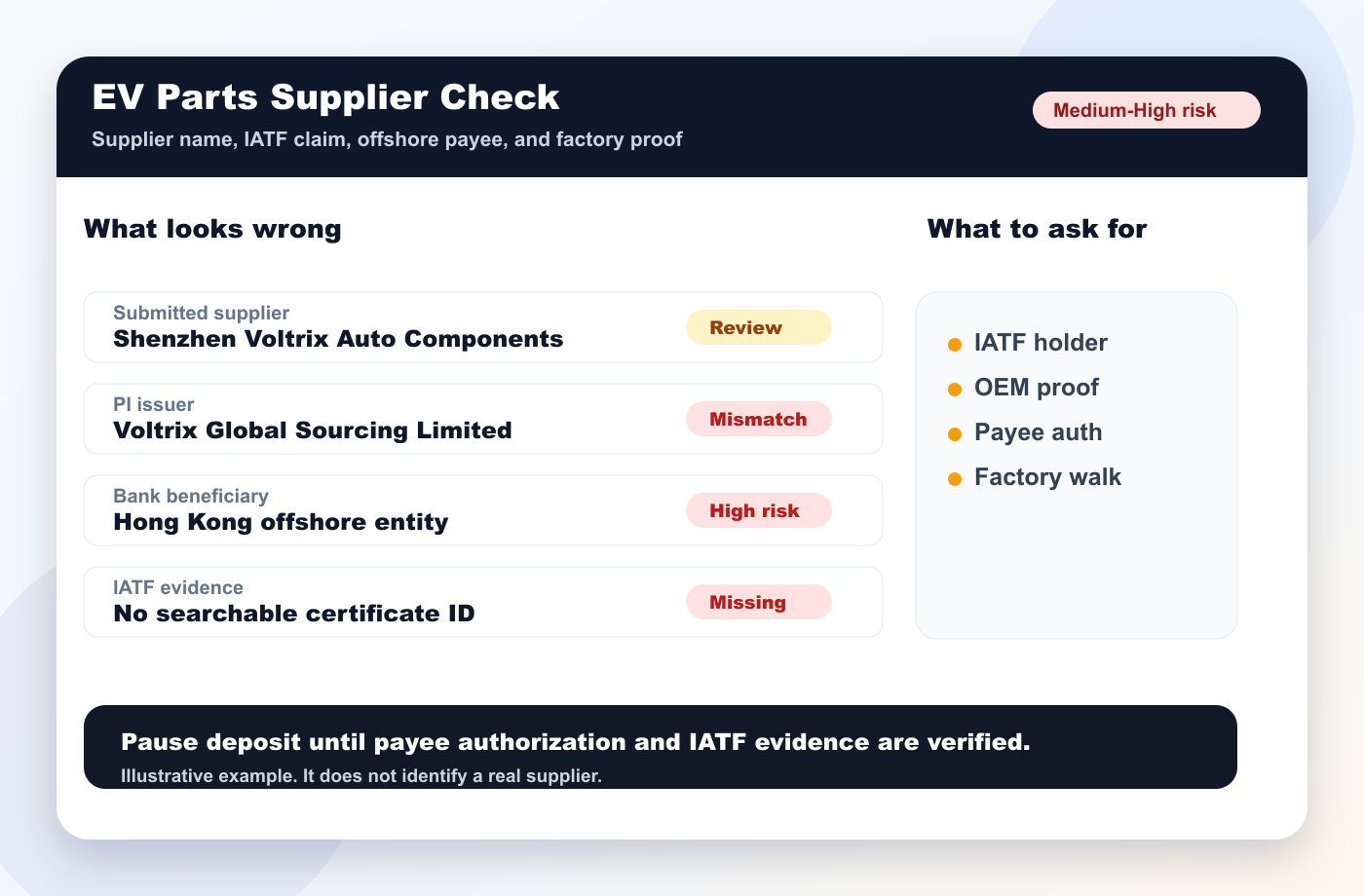
Start with the general example, or jump into an industry case if your supplier sells EV parts, LED lighting, or packaging machinery.

Verification guide

Why these examples are useful

They are written around the moment a buyer is about to send money. Each example shows what looks inconsistent, why it matters, and what to ask the supplier before paying.

Start where the risk begins

Each example begins when the supplier is asking the buyer to continue, send a deposit, or accept a risky term.

Check the names

See whether the supplier name, legal company, website, PI issuer, and bank beneficiary point to the same party.

Look at the right proof

Auto parts, LED, and machinery suppliers create different risks, so each example focuses on the proof buyers actually need.

Know what to ask next

Each example ends with plain next steps: ask for authorization, verify certificates, change payment terms, or pause the wire.

Common questions before payment

Are these reports real supplier investigations?

Some examples are realistic but simulated. They are based on common buyer situations and do not describe real suppliers.

Why use case reports instead of generic guides?

Buyers usually need help at one specific moment: a supplier is asking for money, and the buyer needs to know what to check before paying.

Can a sample report prove a supplier is safe?

No. It cannot guarantee a supplier is safe. It shows what looks inconsistent, what is missing, and what the buyer should ask for before payment.

Which report should I choose for my supplier?

Use a free entity scan when you just found a supplier. Use PI & Payment Risk Review when you have a PI, payee name, or bank instruction.