Company chop
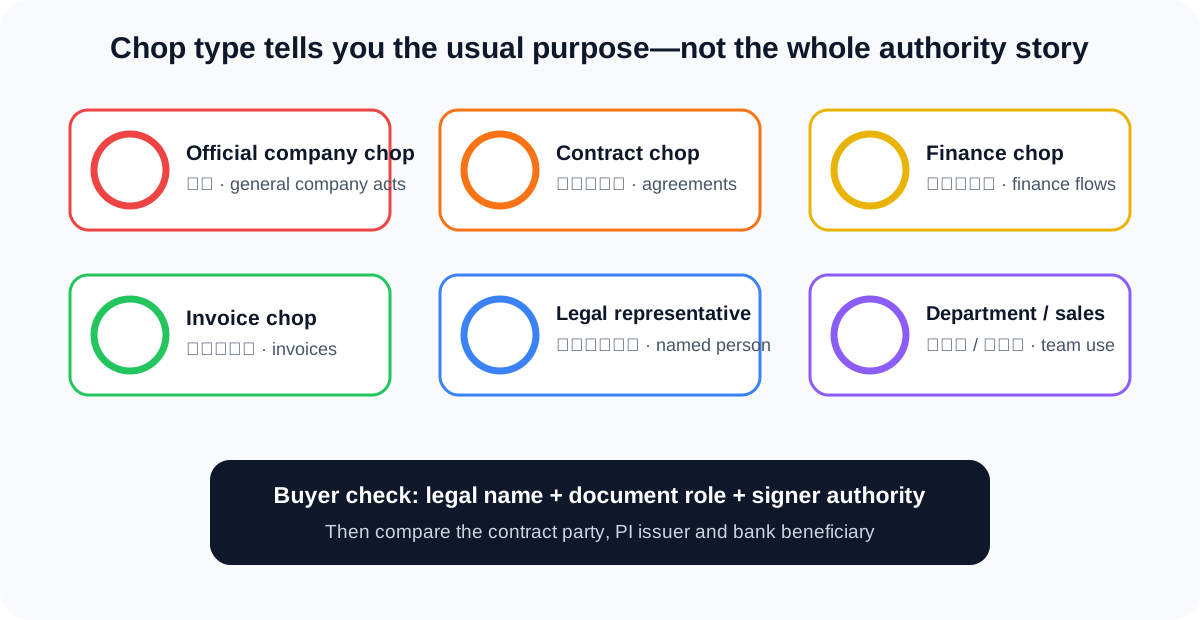
A general company seal commonly used for corporate acts and documents. Its presence may support that a document was issued in the company name, but authority and surrounding facts still matter.
A Chinese company chop is an important authority and evidence signal, but a contract without a company chop is not automatically invalid. Signing, stamping, performance, authority, and the facts of the transaction may all affect whether a contract is formed and enforceable.
By VeriSupplier Research Team · Reviewed
A company chop is a physical seal used to mark documents in a company's name. Buyers often encounter it on contracts, proforma invoices, authorization letters, bank forms, and certificates. The seal is one part of the evidence: the identity of the company, the person acting for it, that person's authority, the parties' agreement, and later performance may also matter.
2. Common typesA general company seal commonly used for corporate acts and documents. Its presence may support that a document was issued in the company name, but authority and surrounding facts still matter.
A seal used for contracts by some companies. Internal authorization and the circumstances of signing remain relevant.
Often used in financial or banking workflows. It is not automatically valid or invalid for every contract; the document, authority, and transaction facts must be considered.
Used for invoice-related functions. It should not be treated as a universal substitute for every other company seal.
May appear with a company seal or signature. Confirm whose seal it is and whether that person had authority for the transaction.
| Type | Chinese name | Typical purpose | What it may support | What it does not prove | What to compare |
|---|---|---|---|---|---|
| Official company chop | 公章 | General corporate documents and company acts | May connect a document to the company name | Authority, authenticity, transaction approval or bank ownership | Full Chinese legal name, document context and signer authority |
| Contract chop | 合同专用章 | Contracts and commercial agreements | May support execution of a contract in the company name | That every employee or deal was authorized | Contract party, scope of authority and surrounding performance |
| Finance chop | 财务专用章 | Finance and banking workflows | May support a finance-related company process | Universal authority for every contract or payment instruction | Document purpose, bank instruction and authorization chain |
| Invoice chop | 发票专用章 | Invoice-related functions | May connect an invoice to the named issuer | Contract authority, factory ownership or payment safety | Invoice issuer, tax details and contract party |
| Legal representative chop | 法定代表人章 | Documents requiring the representative or personal seal | May support the identity of the named representative | That the mark was applied with authority in this transaction | Representative identity, role and accompanying company evidence |
| Department or sales chop | 部门章 / 业务章 | Internal, sales or department workflows | May show which team prepared or handled a document | Company-wide authority or contract enforceability | Internal authorization and company confirmation |
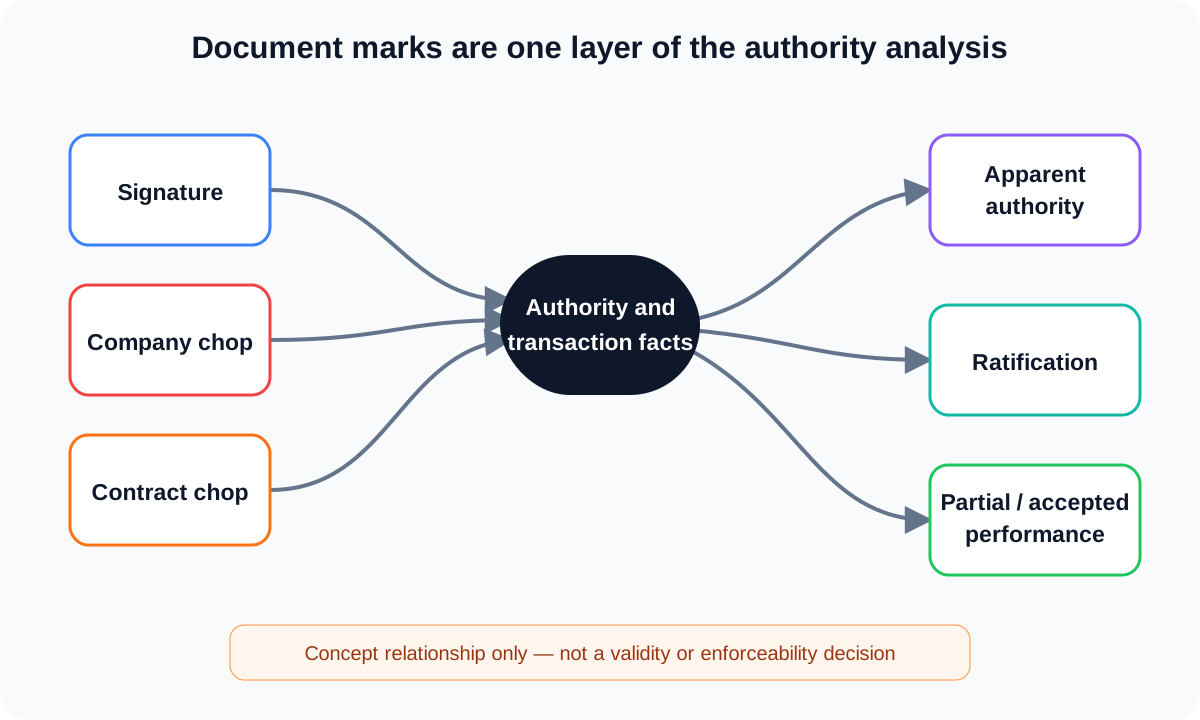
The diagram separates document marks from authority and later conduct. No single arrow proves that a contract is valid; the relevant facts and applicable law still need to be reviewed.
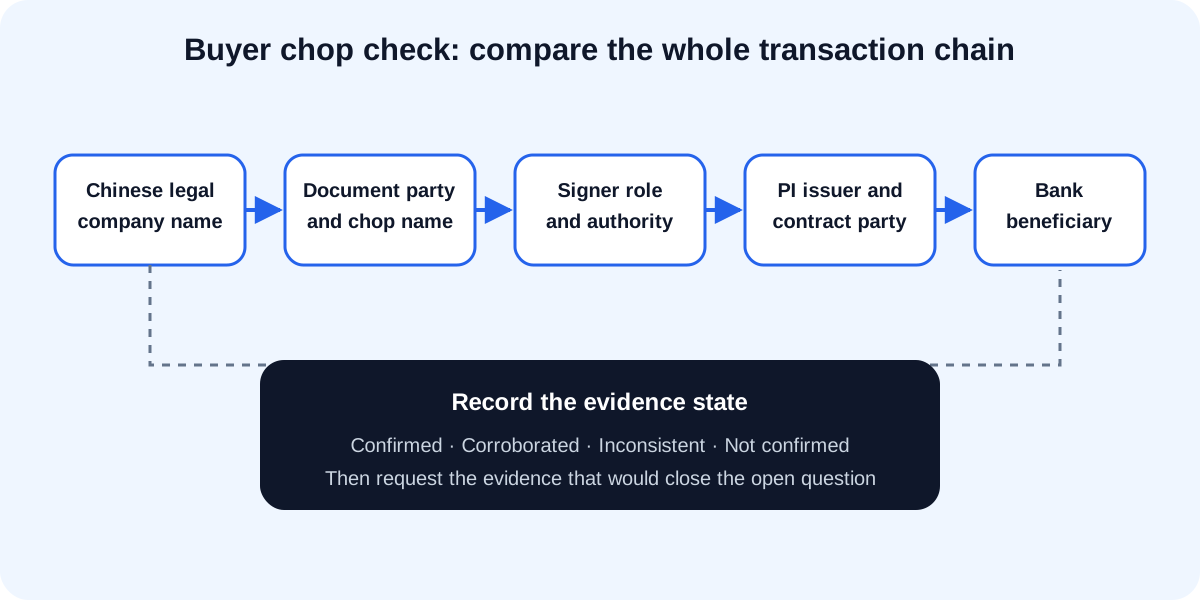
Complete the fields before deciding whether the chop adds useful corroboration or raises an unresolved identity question.
It can support that a document was presented in a company's name, help connect a document to a Chinese legal entity, and provide a comparison point across a license, PI, contract, and authorization letter.
A seal image alone does not prove authenticity, authority, factory ownership, product quality, bank ownership, payment safety, or future performance. A convincing image can still be copied or used outside its proper context.
PRC Civil Code Article 490 says that, where parties use a written contract, the contract is formed when the parties sign, affix seals, or press fingerprints. It also recognizes formation through performance of the principal obligations when the other party accepts that performance. The Supreme People's Court's interpretation further explains that a company cannot always defeat a contract merely by saying the seal was unfiled or forged; the authority of the person acting and the surrounding circumstances can be decisive.
Use the full Chinese legal name, not an English trading name. If the stamp names a different company, ask why that entity appears, what role it has, and which document connects it to the supplier and payment path.
Visual review cannot confirm that a seal was lawfully made, remains valid, was applied by an authorized person, or matches a police or other official record. VeriSupplier does not claim a direct nationwide official seal-database lookup.
Seal registration, coding, appearance, and administrative practice can differ by place and time. A regional rule or example must not be treated as a nationwide universal format.
Use a qualified China lawyer or the relevant local authority when authority, enforceability, a disputed seal, or a material contract remedy is at stake. Ask the bank or supplier for payment-relationship documents when the beneficiary differs.
VeriSupplier can compare the visible company name and other supplied evidence. It cannot authenticate a seal image, issue a legal conclusion, or confirm authority from the image alone.
The company name, PI issuer, bank beneficiary, authority documents, and corporate record should be reviewed together.